Nov 7, 2016

In Praise of Secondhand Smoke

A view of Barcelona from Montjuic
Sometimes one of the best ways to while away some time is with juice of the roasted bean. So there I was sitting in a little cafe mid morning in downtown Barcelona. I was nursing a cafe con leche, the Spanish equivalent of a latte except that a latte is made with espresso. Actually, cafe con leche is a misnomer. The would be the Spanish term. The correct term is cafe amb llet. The Barcelonians are adamant about not being called a Spaniards.  The desk clerk at our hotel made a joke when he gave us the password for WIFI. He said the password was “12345678” so Spanish men would remember it.  I was enjoying my hot beverage while my significant other, AKA wife, was reconnoitering the area to determine which bus to take to Montjuic.

It was a beautiful day on Placa de Braus Monumental. It seems the sun in Spain is brighter or more brilliant than other places in the world. I gazed over the nine tables on the sidewalk under the canopy. There weren't many people there except me and a couple of young folks too much involved with each other than to notice what was going on around them. I was sitting at the middle table facing the bus stop. It was across the street from the shopping mall that had once been a bullring. It mirrored the one in Madrid except the one in Madrid was still used for its intended purpose.  Two young women entered the cafe and sat at the table next to me. Apparently they were shopping as evidenced their packages. They were well dressed and quite attractive. As a connoisseur of feminine pulchritude I took interest.  The woman next to me was a real beauty and dressed to the nines. Her dark hair was pulled back and tied with a silk scarf. She had dark doe eyes, a straight nose and a smile on her lips that could melt the entire continent of Antarctica.  I was so intent in my observation that I took a sip of my cafe amb llet and burned my tongue. What happened next caught me by surprise. From a rather large leather handbag she retrieved a small container.  It blue enamel with a floral pattern. The size and shape was that of an Altoid tin.  Actually, what really surprised me was when she pulled a book of cigarette rolling papers from her bag. I recognized them easily. Once, when I worked at a convenience store next to a clothing outlet, rolling paper sales would skyrocket every time the store would get a shipment of clothing from Central America.I could make a pretty good guess as to what was in the enamelled tin. The beautifully manicured hands expertly fashioned the marijuana cigarette right before my eyes while she carried on a lively conversation with her friend. She was good, but not quite as fast as my grandpa. He could roll a cigarette of Prince Albert pipe tobacco one-handed. Rolling a joint in broad daylight was illegal. One would think.  I have an inquiring mind and wanted to know. So, I asked Mr. Google what the law in Barcelona said about marijuana. AƧcording to Google public smoking of cannabis is illegal. This new knowledge surprised me since I was witnessing the law being broken within three feet of my table! As I sat there befuddled and inhaling the secondhand smoke of what Jim Stafford referred to as the wildwood weed, I suddenly realized the location of the cafe. A dozen feet in front of me a policewoman had apprehended a lawbreaker. But not the young lady in the cafe indulging in recreational drug use. The villain was a cyclist pedaling along the sidewalk. Due to my keen interest in the activities in the sidewalk cafe, I had not realized that the cafe was next to the police station.  Before I had a chance to observe more of local law enforcement, Claudette returned and we were off to Montjuic.

As I settled back in my seat I wondered if I had witnessed a preview of things to come back home in beautiful downtown Charleston.

Oct 10, 2016

The 14:15 to Barcelona

We arrived at Gare de Lyon about an hour prior to boarding our train for the Spanish city. It would be our first time traveling by TGV train. I was a bit excited about the possibility of traveling by train at the speed of 200 mph. We found our car, or rather coach, in short order and stowed our backpacks before finding our seats. The seats looked comfortable. Our other two bags went in the overhead area. I kept my tablet out as well as a small plastic bag of food we had purchased. The seats were very reminiscent of airliner seats. They were upholstered in fabric color coordinated with the interior of the coach.  I found myself looking for a seatbelt. Claudette allowed me to chose the window seat.   As I was adjusting my seat I felt the train move. These electric trains accelerate rather quickly, with the low frequency whine rapidly increasing to the frequency of a siren. But, of course, the sound is not very loud.


I watched as Paris soon disappeared, and the rural French landscape appeared.  As the landscape sped by, I sad to Claudette, “The TGV trains are considered very  modern, although their basic design is over 50 years old. They were originally designed to be powered by gas turbine engines, but the high price of oil predicated the change to electric power.”  “That must have been when Jimmy Carter was president and we had those long lines at the gas pumps,” she said.


“The French have made quite a few improvements in the power system over the years. One special
train was built to set a speed record for trains. It had special motors, and the voltage was increased for its record run of 357 mph.”  I knew I was impressing her with my knowledge.


“It will only take  only 6 hours and 15 minutes to reach Barcelona from Paris.” Now she was impressing me with her knowledge.


“You remember  the tour guide at Canterbury told us that in the UK people don’t fly to Europe from the UK any more; they prefer the train.” She nodded in agreement and began reading from her cellphone. Soon, she would be deeply involved in a Jack Noble novel.


In each carriage is a video screen indicating stations along the way as well as the speed of the train. Of course the speed was posted in kilometers per hour, but it was easy to convert. (0.621 times kilometers per hour equals miles per hour) We reached 300 kph which is about 187 mph. I could not help but remember another fast train I had seen, the number 999 steam locomotive in the Chicago Museum of Science and Industry. It was the first land vehicle to reach 100 mph. The TGV trains had more than doubled that speed in about 100 years. A specially modified train reached a top speed of 357 mph.


The ride is quite smooth. The seats, though comfortable, could be a bit wider. I’ve never eaten my lunch while traveling at 180 mph on the ground before. The sandwich and fruit purchased at at Gare de Lyon filled the bill, although food is available on the train. The aircraft style tray is quite handy. Each coach has its own restroom about the same size as that of a Boeing 737 airliner. There is little noise inside the coach except for the passengers. A group of four behind us laughed and talked loudly.  Probably on their way to Barcelona. Their constant chatter was either Spanish or Catalan; I couldn’t determine which. Across from us a man was working on a crossword puzzle. He was probably about forty with fairly close cropped hair showing a few streaks of gray. His suit fit his athletic frame well. The pale blue button down collared shirt he wore was open at his throat. Although he was working on the puzzle he seemed to be aware of everything going on around him.  Could he have been a spy? Or maybe some Jason Bourne type? There are some things best left unknown. The lady next to him was about the same age or maybe younger and looked like she had stepped out of a fashion magazine. Her dark brown hair  was pulled back and tied with a silk scarf at the nape of her neck. She had high cheekbones, a straight nose and thin lips with a perpetual smile. Her eyes were hidden by black rimmed sunglasses.  She was reading The Girl on the Train by Paula Hawkins. I nudged Claudette and pointing said, “Wasn’t that the book we were listening to from Audible?”
She shrugged and remarked, “Yes, the girl telling the story is an alcoholic.” She returned her eyes abruptly back to her book. She did not like being interrupted.  


We settled in for the journey. About midway we had our lunch. We had bought a sandwich on a baguette with ham, cheese and tomato. Butter for spread, no mayo. Claudette didn’t care for the ham, which was like cured bacon uncooked. Bottled water was our beverage of choice for this meal. I liked the sandwich, although baguettes by nature have a tough, crisp crust.


As we neared Barcelona the train made several stops. The man who looked like a spy was asleep, and the fashion plate was still reading. An elderly woman was playing peekaboo with the two year old in the seat in front of her. Stops were fairly close together so the train could not reach top speed between stops.  We disembarked after grabbing our bags and quickly found a cab. Soon we were at our hotel on the most famous street in Barcelona, La Rambla.


Aug 29, 2016

Silver Men and Smithies

There was a time as little boys we dreamed of going into battle as silver men on fiery steeds with lances poised and broadswords drawn.  But...the silver men are gone with childhood dreams!  At the Musee de l'Armee in Paris old men can relive those dreams. It has one of the largest collections of body armor in the world.  Full metal body armor came into being about the 14th century. You see men wanted to protect themselves in battle. Armor had been around in Greek and Roman times but not full body armor. Not silvermen!


The Roman soldiers wore breastplates and helmets. But not full body armor. Full body armor is usually associated with the 14th and 15th centuries. When men learned how to produce better metal and forming it, full body armor become possible. The metal could be shaped to cover individual parts of the body. Arm, leg, hand, foot and so on. A new type of blacksmith emerged...the armorer. A blacksmith that specialized in making armor. His basic tools were the hammer and anvil. He would have used a forge to heat metal to make it more malleable, so that it was easier to shape. But most of the shaping was done by brute force. Intricate curves were all shaped with a hammer.   The most difficult design problem was to design a suit that allowed freedom of movement while providing protection. Once this design problem was solved the only uncovered part of the knight were the palms of the hands and the soles of the feet.  The armor of the kings and wealthier nobles was decorated by way of embossing, etching, and engraving. Gold and other metals could be inlaid in intricate designs.

Nowhere is there more variation in design than there is in helmet design. The face may have been
enclosed or revealed. There may have been a hat brim or not. Heavily ornamented or plain. Plumed or not. There seemed to be endless variety. One of the biggest problems for the wearer was how well he could see!  Particularly peripheral vision! Whatever the design was, the purpose was the same… to protect the head!
Interestingly enough the weight of a suit of armor was less than you might think. A knight’s armor weighed only 60 to 70 pounds. Roughly the same weight as carried by a modern foot soldier. But the knight rode a horse. Incidentally armored horses weren’t very common. The armorers were no longer needed in the 16th century. Armor was no longer in use. The development of firearms had made full body armor useless.

When, as boys, we dreamed of going into battle as silver men our dreams were spawned by history. Nobles frequently took their sons as young as 12 fully clad in suits of armor into battle.

Just as we as boys had dreamed.
  • musee de l'Armee Hotel national des Invalides, 129 rue de Grenelle - 75007 Paris
  • www.musee-armee.com

It's About Service...


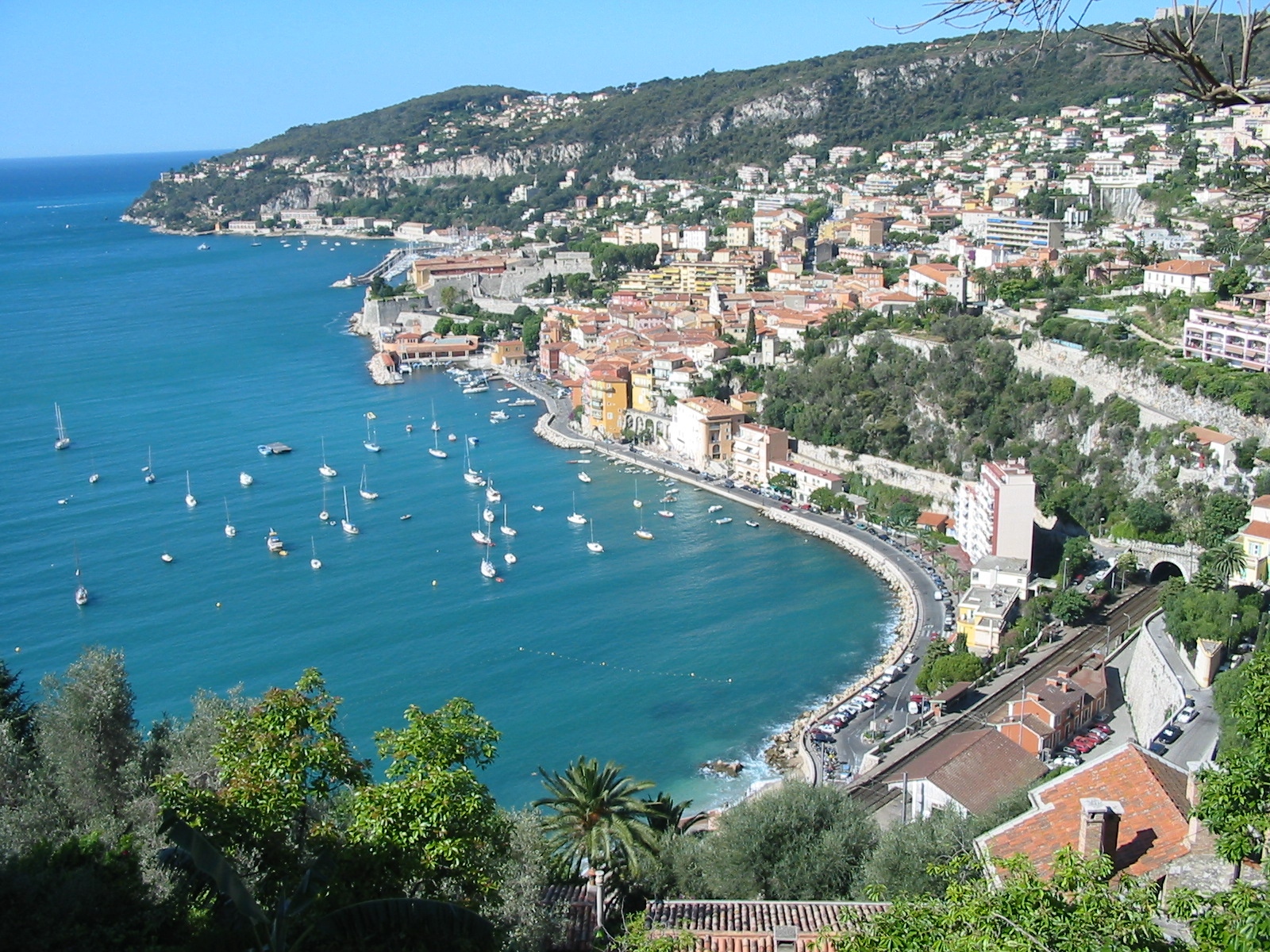
Villefranche-sur-Mer.jpg


In our travels we have had some interesting encounters with desk clerks. For the most part they have been positive encounters.  However...it was not always the case.


While visiting Venice we chose not to stay in Venice proper but rather to find lodging an a nearby island. A great idea. The cost was roughly one half that of a hotel in Venice proper. However, little did we know of the  adventure staying on Lido would hold for us.  When leaving Venice we had to catch first water taxi in the morning to get to the train station on time to board our train for Florence. Upon awakening we could find no desk clerk at the desk. We found ourselves locked in the hotel. After  trashing the front desk, we found a key to the door and were able to get to the train station on time. (read more about this in the blog post: Escape from Lido)


In Villefranche-sur-Mer the desk clerk was quite helpful. The French town is on the French Riviera and we had reserved a room on the third floor with a balcony overlooking the harbor on the Mediterranean Sea.  Due to my medical condition I prefer to use an elevator to reach higher levels rather than a stairway. The helpful clerk informed us that he elevator was not very dependable and may stop between floors. But he quickly added that he would get me out if needed! The next day we were going to catch a train for Nice to visit the Matisse museum and leave our rental car in the parking lot. It was one of those lots  where you deposit some coins in a machine that prints a ticket for you to place on the dash of your car showing that you’ve paid to park. Much to our chagrin the ticket dispensing machine was broken. When we spoke with Jacques, the desk clerk, he said he would take care of it. And he did.


Bed and Breakfast hosts have been quite helpful and offered interesting anecdotes during our travels. When in Alaska the hostess, Mrs. Walker, of a B & B encountered a bear while picking blueberries for our breakfast. Her husband entertained us with stories of hunting mountain goats in the mountain peaks. And in Scotland our host  entertained us with bluegrass music while showing us his collection of stringed instruments. We had a breakfast of kippers at the bed and breakfast on a loch.


One of our most interesting experiences was in Spain. My wife, Claudette, makes all our travel arrangements. Many times she communicates with hotels via the internet making reservations. She had spent considerable amount time communicating with a young Spaniard named Javier. Javier was a desk clerk in a Madrid hotel. He was extremely helpful with directions on which subway train to take from  the airport and exactly which streets to walk to get to his hotel. He was an extremely helpful young man. During our stay in Madrid, Claudette decided we needed to do some laundry.  Normally we would find a coin operated laundry and do it ourselves. But in this instance Claudette thought she would let Javier take care of the chore. “No problem,” he said and sure enough did deliver our clean clothes the next day. Much to my surprise, Javier washed my red shirt with my underwear. The rest of the trip I lived in fear of being admitted to a hospital in pink underwear!


We have found over the years that the most interesting things in travel isn’t the places, it’s the people.

Aug 22, 2016

A Little Bit of Kindness, Please.

credit.jpg


Recently, I was in the checkout line at my local grocery when a somewhat unusual incident occurred.  The line was getting quite long and was not moving. It seems there was an elderly lady having a bit of difficulty scanning her credit card.  The more the cashier tried to help her the more frustrated she became. Customers in line were beginning to get unruly. I overheard some saying such things as: “She ought to be in a home”, “poor old thing”, and “why don’t they do something about her?”  Soon a young man with a necktie joined the cashier.  Slim in stature and with a young-man-on-the-way-up attitude he took over the cashier’s job.   His nametag said he was a management trainee. The young man had an air of condescension toward both cashier and the elderly customer. He quickly took charge by grabbing the plastic card from the elderly woman’s hand and swiping  it.


“See,”  he says, “there’s nothing to it! Now move along!”

I felt a bit of empathy for the elderly lady. It occurred to me that one day we would all be old and much like her and probably have a problem with modern technology. Yes, one day every frustrated person in that line would be having problems too. Growing old is a gradual process and not necessarily one easily adapted to.

I remember when I was a child attending a rural school, one of the treats of the first day of school was a new ruler. It wasn’t very fancy or anything.  Just a wooden ruler with a metal straight edge. The local Coca-Cola bottler would give every student a new 12-inch ruler. On the back of that ruler was printed: “Do Unto Others As You Would Have Them Do Unto You”.  I don’t guess they give them out to students anymore, or maybe that young management trainee just didn’t get one.