Jul 3, 2017

Another Ride

Not so long ago I wrote in this blog about driving a NASCAR race car and about what an exciting ride it was. That was an exciting ride, but perhaps a more excitng ride was the one I took in the 1950s. Of course then I was a farm boy living on a two mule farm. It was a small farm. My father told me stories of working on 12 mule farms when he was young.  The house we were living in was built by my great grandfather on my mother's side of the family.  He descended  from German immigrants who settled in South Carolina in 1762.

It was the summer of my twelveth year when I took my ride. My grandmother and grandfather
lived about a mile away down the red dirt road. They were old. Grandma was born in 1898 and grandpa was older, so I had volunteered to plow up their garden spot. It wasn't a big deal; I could handle driving or plowing one mule and could handle a team hooked up to a wagon. Sometimes I would get in trouble when I would get the mules to run. I reckon I was a pretty good plowboy.  I could handle a mule better than a tractor. At 4-H Club camp we would get a chance to drive the newest tractors. The 4-H was operated under the U. S.  Departmemt of Agriculture to help rural youth. But, I would not be driving a tractor on that day.  No, indeed.  That day I would be plowing a mule; a gray mule.

It was early morning, about half past daybreak, when I slipped into the mule's stable with the bridle in my hand. The air was cool on this April morning, and I had had a breakfast of biscuits and white sop and salt cured ham (I was a growing boy!) and I was ready to work. I was always a little skittish when putting the bit in the mule's mouth. They had big teeth. I could imagine losing a finger.  Because of my height I had to wait until the mule lowered his head. Then I would slip the bit in the mule's mouth while putting the bridle over his ears and head, all in one smooth motion. I would lead the animal from the barn lot to a small building right outside the gate to the lot. That was the gear house. We called harness for the draft animals gears.  I don't know why, and I never knew it was harness until reading Zane Grey novels. The collar was the first thing that was put on the mule, followed by the gears. Later in life I found out that the proper name for the gears were hames. The last thing added were the plow lines, ropes attached to each side of the bridle at the bit. With voice commands and the plow lines you controlled the mule.

The sun was making an appearance when we began walking to my grandma's house. I looked for maypops on the edges of the road to pop, but it would be later in the summer before they appeared. I'm pretty sure that was not the correct botanical name. They looked like a small  elongated lime and grew on a ground hugging vine. The flower was kinda purple and sorta pretty.
Sure wished there had''ve been some to pop.

The old gray mule and I got grandma's garden plowed, and it was time to go home. Gramdma gave me a tall glass of sweet milk and two big warm sugar cookies before I left.  I was tired. I was sun burned. I didn't want to walk home. Why should I have to walk home when the mule could carry me?  That's when I got the idea. I could ride back!  Yep, I could ride that gray mule back!  But I was too short to jump up on its back. I  tried three times and gave up. I was always big for my age. I wore Red Camel jeans, husky size.  There had to be another way to get on that mule's back.  I was thinking on it as I started walking down the road leading the mule. It was an old road and the border between Greenwood and McCormick counties. Only a few yards down the road I heard a car coming. The mule did not want to get out of the road, but with some persuasion it did get into the deep ditch.  Mules are strong and withstand the scorching summer heat well, but they are very stubborn. I think they get that from their daddies, the jackass. 

We, the mule and me, were covered with red dust after the car went by. It was the rural mail carrier. His nickname was Bones.  They say he was in a Japamese prison camp during WWII. I just wished he had slowed down a bit when passing us. My spit was red, and it took a few minutes to clean the dirt out of my mouth.  I got over it, and started to climb out of the ditch and back into the road, when an idea hit me. I could  let the mule stand in the ditch while I mounted it from the high ditch bank. Riding would sure beat walking all the way home!

With the mule in the ditch, I climbed the embankment. I grabbed the reins and jumped astride the mule.   My knuckles were white as I held on when the mule jumped up out of the ditch. Once the gray one was in the middle of the road it reared up on its hind legs. I tightened my grip and held on. Next the mule kicked its hind legs high and launched me. Yep, over the mule's head. For a few microseconds I was airborne.  And then I wasn't. I remember nothing of my slide on my side down the middle of the road. The sandy surface ripped the skin from my semi-naked body.  I felt nothing and had a vague memory of celestial constellationa floating through my mind upon awakening.  Struggling to my feet  and brushing myself off I noticed that the mule was nowhere to be seen. I was a wee bit stiff from the sudden impact with the earth and had stopped bleeding when I continued my journey home.

Upon my arrival home the mule was waiting for me at the gear house making that "hee-haw" sound that mules make.  As I removed the gears from the mule I mumbled some things under my breath, that if my mama had heard, would have surely resulted im punishment. I knew that I was already going to get a tongue lashing for being all bloody and all.  Later in life I did drive a NASCAR racecar  at over 130 mph and that was exciting. But that wasn't the same being launched from the rear end of a mule on a country road.That was  my first exciting ride.

Jun 22, 2017

119 Gordon Row


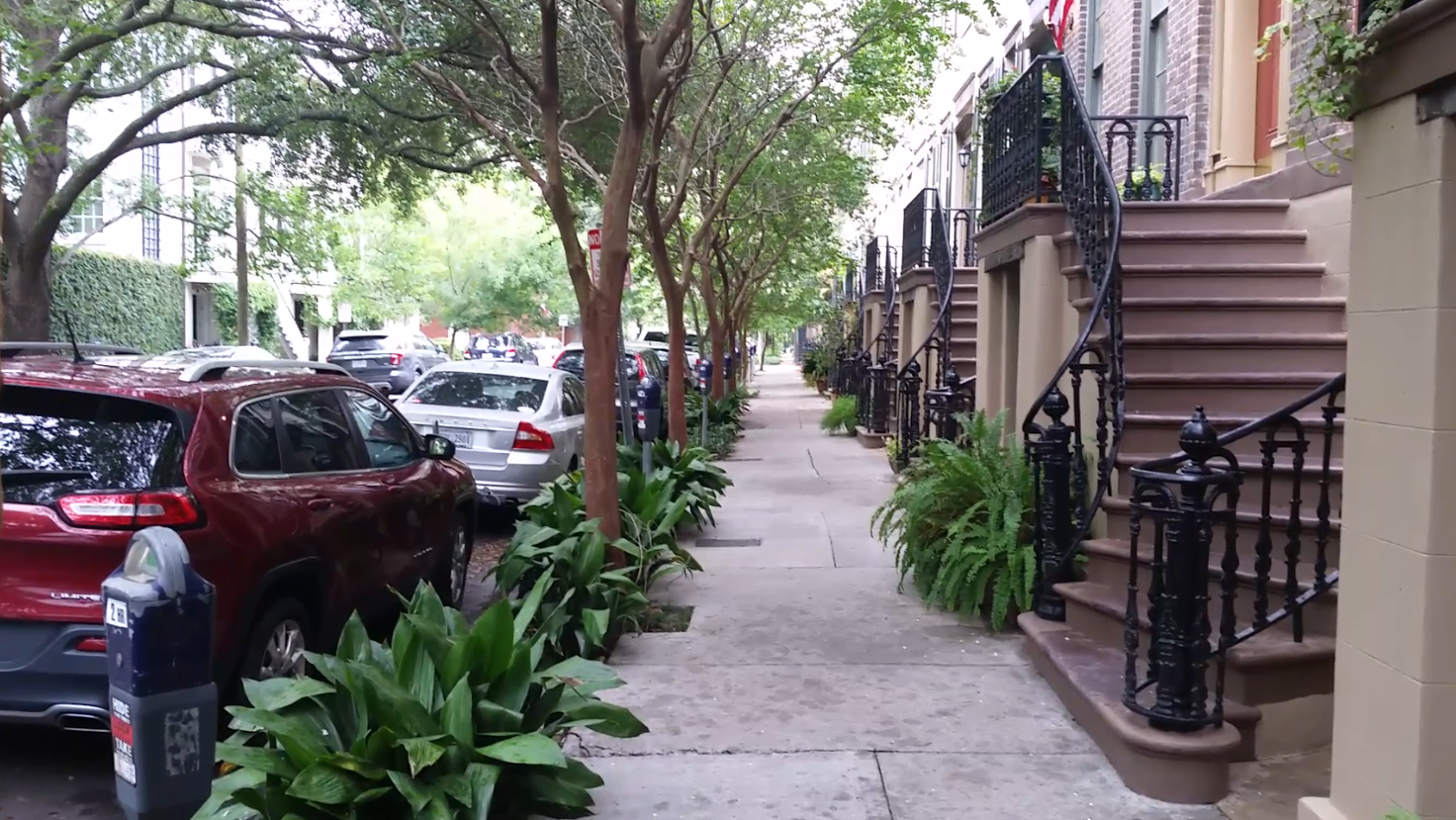
I was listening to the slow summer rain fall on the roof as I read the story.  It  was a warm afternoon in Savannah, and we had just checked into Savannah's Bed and Breakfast InnThe Inn is housed in joined houses which form Gordon Row and was built 1853-54. It features wrought iron banisters leading to the parlor floor of the four story structure. On this shady street off Chatham Square, the inn exudes the charm of the old South with treelined streets, hanging Spanish moss, and blooming flowers. We had enjoyed lunch with friends soon after arriving in this city, on the banks of the river for which it was named, before checking into the Inn. The drumming of the rain on the roof gave more life to the story I was reading about the war in Afghanistan. It echoed the gunfire from the war zone. Claudette was catching up with her Facebook friends on her iPad at a nearby table. The overhead fans moved the warm humid air in a futile effort to cool things off. The story I was reading about American soldiers collecting the corpses of Afghani war victims was in stark contrast to my surroundings. A semi-calico cat brushed against my leg and brought me back to reality, as a young couple entered the porch from the parlor. Both were dressed in shorts and flip-flops. She wore the shorter shorts, but both had on long-sleeved shirts, untucked. Her dark hair spilled over her shoulders, and he had the fashionable facial stubble.  I would have put their age at mid to late twenties. They were very much engrossed in each other.  Newlyweds?  Perhaps. I finished reading the story

before Claudette was ready for tea, and I busied myself looking at the patio gardens below.  From my second story porch vantage point I got a good view. Several had fountains.  One particular fountain of note was an ugly creature spewing water from its mouth. Ceramic or stone stone animals were quite common too. I took a few photos including some of angels or "garden angels", as I referred to them. 
Soon she had finished catching up with her daily emails, and we ventured inside for tea. For some reason, after visiting the British Isles several times, afternoon tea has become a part or our daily lives. There was a variety of teas available, but I usually prefer a standard English breakfast tea with two lumps of sugar. I let others enjoy the various and sundry flavors. The necessary items for tea were on an elegantly carved sideboard with tiny pastries under glass. The parlor extended from the front to the back of the house and had matching carved black marble fireplaces along one side. Art framed in carved gilded frames hung on the walls. Some were botanical prints and others original oils or watercolors, and there were some reproductions on canvas also. All were very tastily hung on an off-white wall.  Of course everything was well illuminated by overhead chandeliers. 


We retired to our room to relax a bit before dinner. Our ground level room was spacious with private bath. There were two queen-size beds with matching carved headboards and were truly beautiful pieces of furniture. There was an upholstered chair by the window with end table. The flat screen TV was on a chest of drawers beside the fireplace. I kicked back on the bed and was going to watch television when I spied a stack of books on a shelf behind the room door. I selected a book reviewing a recent film festival in the city. 

We walked a few blocks to the Crystal Beer Parlor to dine. As you would imagine it had a storied past dating back to the early 1900s. I had the shrimp scampi pita pizza and it was delicious. It was a white pizza and the shrimp were surprisingly tender. Claudette had the bison burger which she enjoyed. 


Breakfast was all you could ask for. We had the classic breakfasts of eggs, bacon, toast and fresh fruit. I ordered strawberry jam for my toast. Yogurt parfaits, and waffles were also available. We had placed our orders for breakfast when we checked in. The parlor had spaces at the tables for 20 guests, but we did not see that many there at once. The waitress was very courteous and efficient.

But alas it was time to check out and leave to travel north to our home. I hope that the next time we visit Savannah it doesn't rain every day. We did find a nice place to stay even though it rained. 


May 29, 2017

Memorial Day

It's another Memorial Day.  I've seen seventy-three, but that doesn't make me exactly an expert. I seriously doubt if many college students today could tell you much about it. From my childhood, I don't remember much except that my father on Memorial Day would put on his American Legion cap and sell paper poppies for boutonnières. He would have the day off from work too. In the south where I grew up it wasn't much of a celebration like I heard there was in the north and mid-west with parades and such. 

The actual origin of Memorial Day is unknown.  For centuries folks have placed flowers on the graves of the fallen in battle on certain days. It seems that after the War Between the States, in 1868, May 30 became the quasi official Memorial Day. It did not mean a lot to me as a schoolboy since it occurred after school was out for the summer. In 1966 President Lyndon B. Johnson with approval of Congress made it an official federal holiday. Almost all official holidays are now celebrated on the Monday nearest the original date. 

I, like many others, remember those family members who died in military service to our country. My uncle, John Young, died in WWI.  Each Memorial Day I post a short video I made about him on Facebook. He, like so many over the years and presently, left the security of their home to set foot on foreign battlegrounds never to return. There is hardly any battleground whose earth is not stained with the blood of an American fighting man. And a sea not tinged with the blood of an American sailor does not exist. Those who've been in harm's way know the peril of battle and the honor of fighting for the liberty we love. Those who choose not to be in harm's way should endure the scourge of free men everywhere. 

I served my country's military and I'm proud I did. 


May 23, 2017

A Visit to an Old Friend

The brown hair is now thin and gray. And he's not ramrod straight and slim anymore but he's still my shipmate from the Vietnam era. Clad in a plaid shirt and faded jeans he holds a .22 Hornet rifle.  " I brought home lotta deer with this gun," he says in a low voice. Kenny never spoke in a loud voice. He held the little rifle with the scratched and dinged stock a few minutes  and  then gently placed the gun in it's place and retrieved another. Then then handed me a rifle with a telescopic sight. It was a beautiful example of the gunsmith's art. The American walnut gunstock was checkered elegantly. There was not a scratch on the wood or metal parts of the gun.  "I bought this Ruger at a good price. This guy I knew was having a little money trouble and offered it to me for two hundred dollars. It was almost brand new. I bought it right away. It was a great deal," he said. He spoke matter-of-factly. Kenny always spoke in what could be described a quiet semi-monotone.

"Nice gun," I said caressing the fine sporting arm, feeling the weight  and imagining seeing a big bull elk or buck in the sights.

He continued.  "Yeah, it 's a nice gun. But I can't forget the first time I hunted with it. When I got it, I took it out to the range and adjusted the sights.  It was about the third day of deer season in November before the early snow when I got to hunt with it. I was watching this path where I had seen deer before. A big hemlock was providing me with cover, when I saw movement behind some small trees. A few minutes later a small doe entered the clearing. She stopped. I eased the safety off that rifle."  He nodded toward the gun in my hands and continued.  "I pulled the trigger and all I heard was "click!" I ejected the cartridge and slammed the bolt home ramming another cartridge into the chamber. The little doe was sniffing the air. The rifle misfired again. I ejected the cartridge and loaded another. But  she was gone. Once I got back to the house, I put up a target on the side of the barn. The rifle performed perfectly."

"What did you do then?" I asked as I slammed the action closed.

"I went back the next day. I opened a new box of cartridges and took those with me.  The big hemlock provided the perfect place for me to hide just as before. The first snowflakes of winter appeared. Snow has never kept me from hunting. Would you believe it ! The same thing happened again. It even looked like the same little doe. I was really pissed. I couldn't believe it. I wished  I had carried the little .22 Hornet. It always brought the deer down. When I got back to the house I went down to the barn an put two more shots in the target on the side of the barn. I was desperate and carried the gun down to Mack's Sporting  Goods and he shipped it off to Ruger.  Ruger had made the gun."

"Did Ruger fix it?" I wanted to know.

"They said some little spring was bent or something. I had to make sure it was fixed though. As soon as I could I went back to where I saw the little doe. It was now early December and the clouds were low and there was about four inches of snow on the ground. The brilliant crimson color of the sugar maples was gone. The hardwoods didn't have any leaves on 'em and their tree trunks were stark and motionless. The quietness was almost deafening. I was sure that if a snowflake had fallen I would have heard it hit the ground. The temperature was falling as the light was waning.  It would soon be dark. There was a little tickling in my throat. Lately I had been plagued by a hacking cough proceeded by a tickling in my throat. Now was not the time to cough. I had sat there about three hours when I saw some movement behind some  small birches. Pretty soon a deer walked into the clearing but it wasn't the little doe. It was a big  eight point buck. That was his rack I showed you in the garage," he said  and the corners of his mouth turned up a bit.  That was about as close a Kenny ever got to a smile.
I remembered the antlers with the skull attached.  There must have been well over a foot between the tines.
"I couldn't believe it but that guy knew about the problem with the gun when he sold it to me. It kind of pissed me off but I did get a good rifle cheap. Ruger didn't charge anything to fix it either.  I guess they didn't want to admit they made a gun with a defect."

It was great visiting Kenny and his mate. You know your friendship is genuine when you can pick up a conversation just where you left it fifty years before.

May 18, 2017

Inside The Emperor's Palace

We were constantly surprised by our finds on the Dalmatian Coast of the Adriatic Sea. An Emperor’s palace was  certainly a surprise. I asked Claudette whose palace would be in Croatia. She drew a blank, as did I.  As the big tour bus rolled into Split, we were about to find out. The bus stopped about one hundred feet from the waterfront for us to disembark. “I wonder where this palace is?” I mused.


Claudette overheard me talking to myself and responded, “ Me too. We’ve seen palaces all over Europe. Usually, you can see a palace from afar before you actually get to it.  Except,...maybe...the Medici  palace in Florence.  It kind of blended with the buildings on the street.”


“Yep, maybe so,” I said.


We entered the palace through a rather nondescript door. This was  the retirement palace for the Roman emperor Diocletian built in the early fourth century A.D. Actually, palace is somewhat a misnomer for the seven and one


half acre complex of buildings within the walls.  Only about half was used as the emperor’s residence. The total number of residents within the walls would have been about nine thousand and many of these were garrison soldiers.  The palace contains over two hundred buildings. We adjusted quickly to the coolness and the lack of the bright Adriatic sun. The tour group appeared to be in the middle of a gift shop.  I thought immediately of the movie Exit Through the Gift Shop.  Our guide urged us to follow her. Soon we were in the center of a vast empty hall with a barrel vaulted ceiling underground.  It was interesting to note that the huge blocks of limestone used in construction were not of a consistent shape.  This allowed the stone to be fitted together much like a puzzle.  The builders had taken in consideration the frequency of earthquakes and this structure had survived many. The lower level would have allowed access to the sea for escape should it become necessary. We continued to follow our guide through the underground chambers. As I daydreamed about what life would have been like in the fourth century the voice of the guide in my ear brought me back to reality. I nudged Claudette and asked, “Did I hear what I think I heard?”


“If you think you heard that Tito had college students digging through what was left of a fourth century toilet, you are right,” she said.


“H-m-m, maybe archaeology students?” I said.  Marshal Tito was the benevolent dictator of Yugoslavia, and Croatia was a part of Yugoslavia when he was in power. We continued underground a bit more before emerging into the bright sunlight.  Our group appeared to be on a city street with buildings all around. As we followed our guide through a large arch we were in for a musical treat.  The music is called klapa. It is the traditional a cappella singing of the Croatian coast. The voices of seven men blended harmoniously in Croatian folk songs. It was quite a treat.  I bought their compact disk. I had bought a fado cd in Portugal. Our guide urged us onward. Soon we were in an urban square or plaza surrounded with columned buildings with arches galore. “This is the Peristyle,” said the guide, “and that building is the entrance to the emperor’s living quarters.” She indicated the cathedral of St. Domnius, originally the mausoleum of Diocletian, which dominated the square. Three temples to various Roman gods are on the Peristyle. One statue of a sphinx, one of the original four imported from Egypt, remains. Soon we were in a less than grandiose area of the palace. Over the years squatters have taken up residence in the palace. Claiming to be descendants of the original inhabitants, the authorities have been unable to dislodge them, although it is a World Heritage Site. They do not maintain their residences up to expectations.


Our tour guide led us back to the waterfront, and we continued on our own.


Claudette and I enjoyed a cappuccino by the sea.  I enjoy watching watercraft come and go.  We had only been there fifteen minutes or so when sidewalk activity seemed to increase. Between our table at the outdoor cafe and street front buildings  a crowd was gathering. There was a news media van and a lot of men in suits and ties. According to our waiter, Barbie was coming. Who was Barbie? Barbie is the affectionate nickname of the president of Croatia, Kolinda Grabar-Kitarovic. The tall blond is the first woman president of Croatia. Many pictures of the statuesque woman appeared on the internet in a very brief bikini, but they were all proved to be another blond. Our tour guide told us that the prime minister wields the true power in the Croatian government. The Prime Minister did appear for a few minutes. We were not privy to the reason for his visit to this city of one hundred eighty thousand.

We had a snack of miniature pizzas on the way back to the tour bus. At the small restaurant on a plaza, I enjoyed watching a small boy play peek-a-boo with his mother around the statue of some hero of a bygone era. Once on the bus we would continue our trip along the Dalmatian Coast, which is slightly reminiscent of the Amalfi Coast of Italy.