Jan 17, 2013

House of Stone

Perhaps one of the first places early man sought shelter was caves.  When mankind evolved from hunter-gathers to permanent residents caves sometimes became residences. Not so long ago during our travels we visited a cave residence. Technically, referring to this house as a cave is a misnomer.  According to definition a cave is created by natural forces, while these underground living spaces are constructed by men.  There are people who have made living spaces out of caves in recent years in the name of unique dwellings. The cave dwelling we visited had been occupied constantly for many years. It had been passed down from generation to generation. In the Cappadocia area of central Turkey is the town of Goreme. Goreme has become a tourist destination for people visiting the caves of Cappadocia.  The town sits on volcanic rock in the midst of rock pinnacles reaching skyward.  Some of these pinnacles, conical stone fifty feet tall and taller, are called "fairy chimneys". They are also known as tent rocks, earth pyramids, and hoodoos and are pictured on a  50 Turkish lira note.

I've always found the people we meet on our travels interesting, and people in Goreme were no exception. Fortunately, there we had the  had the opportunity to visit a person who lived in a cave dwelling as her home. The tour group we were a part of got off the bus overlooking a broad valley surrounded by rocky peaks of lava rock. In the valley were a hundred houses or more; some were conventional, and many were cave dwellings carved in huge fairy chimneys. From a small building selling souvenirs we walked down the stone steps to the entrance of the cave dwelling. This was the entrance to the cave house built in a low lying mound of solid stone.  Once inside we walked down a passageway of about fifteen carved steps. The walls were void of any decoration.  But there was  electrical wire attached, spreading like a spider's web.  The passageway divided at the entrance to the two rooms.

The first room was covered with hand knotted rugs of colorful and intricate designs,  a kaleidoscope of textiles. The room was about 15 feet square with a window opposite the entrance.  Visible through the window was a panoramic view of the valley below.  The walls were reminiscent of stucco, but I believe they were whitewashed stone except where covered by what appeared to be brown kraft paper. There was a framed print of a woman at a loom  on the wall amidst the electrical wiring. I thought this odd because because the Koran teaches that only God can create an image of a person. The furniture consisted of several low sofa,s also covered with hand-knotted carpets, and there were two low tables.  On the right-hand side of the room was a doorway shrouded by a curtain. I glimpsed a refrigerator behind it.  Illumination came from a single glaring fluorescent bulb from the low ceiling. The only other object in the room was a loom on the left-hand side.  It was quite crude, having been assembled of local materials with hand tools. However, there was the beginning of a beautiful multicolored  hand-knotted rug.

"This is Yade," Yesim, our tour guide said, "She welcomes us into her home."

"I am happy to see you," said the dark haired woman, who appeared to be about thirty-five years old, in English only slightly accented.

"She will be happy to answer any of your questions," our guide added
"How long have you lived here?" asked a Canadian lady.

"Since I married Hamid some fifteen years ago. The house has been in his family for generations."

"That is his shop at the top of the hill," added Yesim.

"He is a very good man. In my country the mother of the woman chooses the husband for her daughter," Yade told the surprised women in our group.

Yade was forthcoming with more information about her home and family. She said the there was an outside toilet, and that meals were prepared in the small kitchen. She had made one of the rugs on the floor as part of her dowry.  It had taken two years to make.

"How do you heat this place? I know it sometimes snows in winter," asked our new friend John from Ottawa.

"We bring the coal-burning stove from the outside and put it there," she said, pointing to where the Indian doctor from Detroit was sitting.

Overhead the place for the stovepipe was clearly visible. Since in the Moslem world women are required to keep their heads covered, Yade gave the ladies some headgear tips. She demonstrated, using the women in our group as models, the various ways to wear a scarf covering one's head. However, there was a Pakistani lady who did not need her assistance as her head was already covered.

We visited for about an hour, including looking in the other room, which had cubbyholes carved into the rock for storage. She had a beautiful collection of folk dolls as well. 

After saying our farewells to Yade we went to her husband's shop and had glasses of hot sweet tea while overlooking the valley below as the sun set in the west.


Jan 14, 2013

Looking Back

It was a very good year, the two thousand and twelfth year after the year of our Lord.

We began sipping cold Bahamian beer and eating conch fritters while watching a parade in beautiful downtown Nassau. A quick cruise from the Holy City in January had brought us there.  I'm not a big fan of cruise ships myself, but the price was right and "what the heck". It was fun, and our waistbands did not expand very much due to the excessive amount of food available on board.

In February we arrived in New Orleans for a look at the Crescent City the day after Mardi Gras ended. The trees were drooping with beads. We met an old friend and his wife there.  Don and I had been shipmates in the Navy during the war in southeast Asia. We met our youngest son and his significant other there as well. It was great fun walking the streets, dining at Cafe duMonde, and enjoying the art on the fence at Jackson Square. We encountered some dazed revelers on Bourbon as we walked to Royal Street to enjoy the street entertainers.  While there we used the city's famous streetcars for transportation. The National WWII Museum caught this history and technology nut's eye. The four days went by quickly with great friends in a charming city.  Then, it was time to fly home on a Delta BOGO ticket.

In April my dear wife had purchased Groupon tickets for lodging on a riverboat in Chattanooga, TN.
Grand entrance to the Delta Queen
Who wouldn't like to spend the night on a haunted riverboat? The trip to Chattanooga itself was quite eventful.  On this road trip our first stop was Augusta, GA, a city made famous by James Brown, the Godfather of Soul, or to some, the Masters Golf Tournament. We were interested in the great art collection in the Morris Museum of Art, which we enjoyed visiting after a lunch of barbecued pig meat. I would have loved to have visited the Confederate gunpowder works but, alas, the only thing left is the smokestack. Then, on to Athens and a visit with our daughter. While there we visited the High Museum of Art in Atlanta, the Atlanta Shakespeare Company, and the Bear on the Square Mountain Festival in Dahlonega. All these events were great fun, but we had to keep moving to honor our reservations on the Tennessee River.  The Acura's navigation system worked flawlessly, and we were aboard the Delta Queen for dinner.  Our cabin was on the second floor, or as hoteliers would say to sailors, the "02 level", and was quite small.  The last cabin to house a American president is on the deck above.  The Delta Queen is like an aging film star. She's a bit tarnished, has a few wrinkles, and isn't near as agile as she used to be. But, she still has charm and grace. We visited the Civil War battlefield, The Tennessee Aquarium, Ruby Falls, and we rode a train at the Tennessee Valley Railroad Museum.  Our most interesting point of interest, however, was the Station House Restaurant in the Chattanooga Choo Choo Hotel, with the singing wait staff.

Old Sacramento
May was a great month for us, as we ventured to the west to visit relatives.  We landed in San Francisco and picked up our rental Chevy at the airport.  Without a navigation system on the car we were relegated to using our cell phones which worked great. We spent the night in Castro Valley before doing some sight-seeing.  Our first stop was Sacramento,  capital of the state of California, where a part of the city is restored as "Old Sacramento".  Here we dined aboard the Delta King for dinner.  It's the sister, or brother, or sibling ship of the Delta Queen mentioned previously. I enjoyed the California Automobile Museum there.  However, I was not impressed with Gov. Jerry Brown's Plymouth Satellite. But, there were some very interesting automobiles and nostalgic ones like the shoebox Ford in which I learned to drive. We saw more family in Murphys, CA and had a nice dinner there. But the thing I remember most was the Calavaras County Fair at Angels Camp. This is where the jumping frog contests are held annually.  Mark Twain told us all about it. By the way, the record is now over twenty-one feet for a three hop jump. Castle Air Museum near Atwater was our next stop. As an aerophile*, I just couldn't pass it up. It was the first time I'd seen a B-29 Superfortress bomber inhabited by a ghost, but he didn't make an appearance during our visit. Yosemite National Park was great but crowded and the first place we paid over $100 for a room and had to walk downstairs to use a bathroom.  But it was an inn from the mid-nineteenth century. In Santa Barbara we saw more family who joined us from San Diego and enjoyed the Santa Barbara Art Museum. Interestingly enough it was market day, just as it was five years ago when we were there.  From there we traveled on to San Jose where we met more family, and some lovely nieces gave me a birthday cake. After that it was back to Castro Valley and then to Upper Lake to see more family before returning to San Francisco for our flight home.  We made a stop in the wine country to visit another niece and a stop in Alameda for dinner with a friend along the way.

We recuperated a bit through most of the summer until September when I realized a boyhood dream. I've always been a fan of stockcar racing.  And, wouldn't you know it, there was a Groupon coupon for the NASCAR Experience at a reduced price.  The famous Darlington Raceway is about a one hour drive from home, so we were on our way one warm Sunday afternoon. I had never been there but had watched or listened to broadcasts of races from there for over forty years. I went to the drivers' meeting and soon found myself behind the wheel of an 850 horsepower race car.  Needless to say it was the thrill of a lifetime.

Morning on Kauai.
For many years, Claudette and I have had the goal of visiting all fifty of the United States.  We have about seven that we haven't visited.  One of those was Hawaii. So when the opportunity to join a  tour group on a Hawaiian tour presented itself, we jumped (maybe not quite jumped) at the chance. We flew from Charleston to Atlanta and Atlanta to Honolulu.  Our tour guide presented us with necklaces of flowers which they call leis.  Much to my chagrin I did not get kissed by a pretty polynesian girl in a grass skirt. After we got to our hotel and were briefed by our guide some things became very apparent to us.  Hawaii is EXPENSIVE. Although several tours were included in the basic price of the tour package, many attractions were not. We could easily spend as much on additional tours as we had on the basic tour package. It was our first time on an organized tour.  I was surprised that all tour guides expected a tip for their services.  I suppose that the initial fee was to pay for the opportunity to give the guides a tip.  We did enjoy our trip to four of the Hawaiian Islands. Oahu, Kauai, Maui, and Hawaii are true jewels in the Pacific and an ideal place to spread your wealth. If you're there, walk the crater of a live volcano, drive the Hana highway, drink some Kona coffee, eat loco moco, and o.d. on sunsets and rainbows while listening to the surf sing the siren's song.  But paradise did not last forever, and soon we were home again with Sophie.

We made a quick trip to New Jersey to visit more family, and while there went to New Hope, PA. New Hope is a tourist town on the Delaware River.  If you were a fan of the Sopranos you'll remember that the artist that painted the portrait of Tony's racehorse lived in New Hope.  We left NJ the day before Sandy hit the coast.  Lucky us.

Belly dancer in Istanbul
Sandy did have some influence on our next trip though. We were in New York's JFK the first day it was open after the hurricane on our way to Turkey via Zurich.  Going to Turkey was my idea. I wanted to visit a Moslem country which I felt was  safe.  Turkey met our requirement. Although this was a guided tour, it was dramatically different from our experience in Hawaii. Everyone we met was exceedingly helpful. Vendors appeared very appreciative of your business.  We enjoyed the Grand Bazaar, Topkapi, Istanbul, Ephesus, Troy, Ankara, and Gallipoli.  Our tour covered over 1400 miles, and we saw the ruins of ancient cities, enjoyed extraordinary foods, and saw the manufacture of hand made pottery and hand-knotted rugs. Belly dancers and whirling dervishes thrilled us. Perhaps, the high point of our trip was the hot air balloon ride over the lunar-like landscape of Cappadocia.  Turkey is one of the places we would like to return to.

Upon returning home it was time to prepare for our annual Christmas party.  And we did. We delight in having our friends at our house for Christmas.   Also in December four children appeared.

It was probably our best year ever, made all the more special by seeing all six children in the same year.


* If a person who admires all things English is an anglophile then why can't a person who likes all things aviation be an aerophile?


Jan 11, 2013

One of the Joys of Travel

No matter where you go there becomes the need to heed the call of nature.  In our travels we have found various forms of toilets. However, the evolution of said toilet eludes me. In this dissertation toilet refers to that which one sits on in a western style restroom.

In visiting various Roman ruins in Europe and Asia public and private toilets are featured.  Made of stone, and no doubt somewhat uncomfortable, a person sat on them while doing what we as children called a "number one"or a  "number two". These stone toilets could be very cold in some climates,  but enterprising Romans had a solution to this discomfort. They would simply have their slave sit until the seat was warm, and then the master would take over and do his business. Roman toilets which had water flowing beneath them to remove the waste often had sweet smelling plants nearby to offset the somewhat offensive odors of human waste.  Since this was before the advent of the Scott brothers marvelous invention of toilet paper the Romans used a wet sponge for cleansing purposes.  These toilets used in the first century were common throughout the Roman Empire.

And now foe the part of the evolutionary process I don't understand. It has been my observation that "sit-down" toilets are only common in the English speaking part of the world.  Much of the world uses "squatters".  I'm reminded of an incident in Turkey when a tour leader had a problem with the same American tourist always being late for the bus after each stop for a restroom break. After this had happened several  times and was beginning to create a problem with the tours schedule she confronted the tourist  to determine the reason for the tardiness.

"If you don't mind my asking," she said apologetically  "why are you always late?"
The rather elderly woman answered sheepishly, "After sitting on that hole in the floor, I have a lot of trouble getting up!"

I don't know why no one in France or Spain picked up on the Roman design of toilets.  In modern cities you'll find the "sit-down" or western style, but off the beaten path a bit you'll often find a "squatter".  Why a country as sophisticated as France, which was instrumental in developing the Concorde supersonic airliner and the Airbus A-380, would still have a "squatter" toilet is beyond my comprehension. I can kinda/sorta understand how the Japanese would still have "squatters"; the Romans were never there, but France and Spain?

This lack of the evolutionary process does make life interesting. However, it's hard to find it very interesting when you're squatting over a hole in the floor and realize that the country you're in has not adopted the western custom of using toilet paper.


Author's note:  I applaud the "squatters" that have foot positions outlined on the floor and hand holds on the wall to assist you in getting back to the vertical position.           


Dec 30, 2012

Are You Smarter than Your Phone?

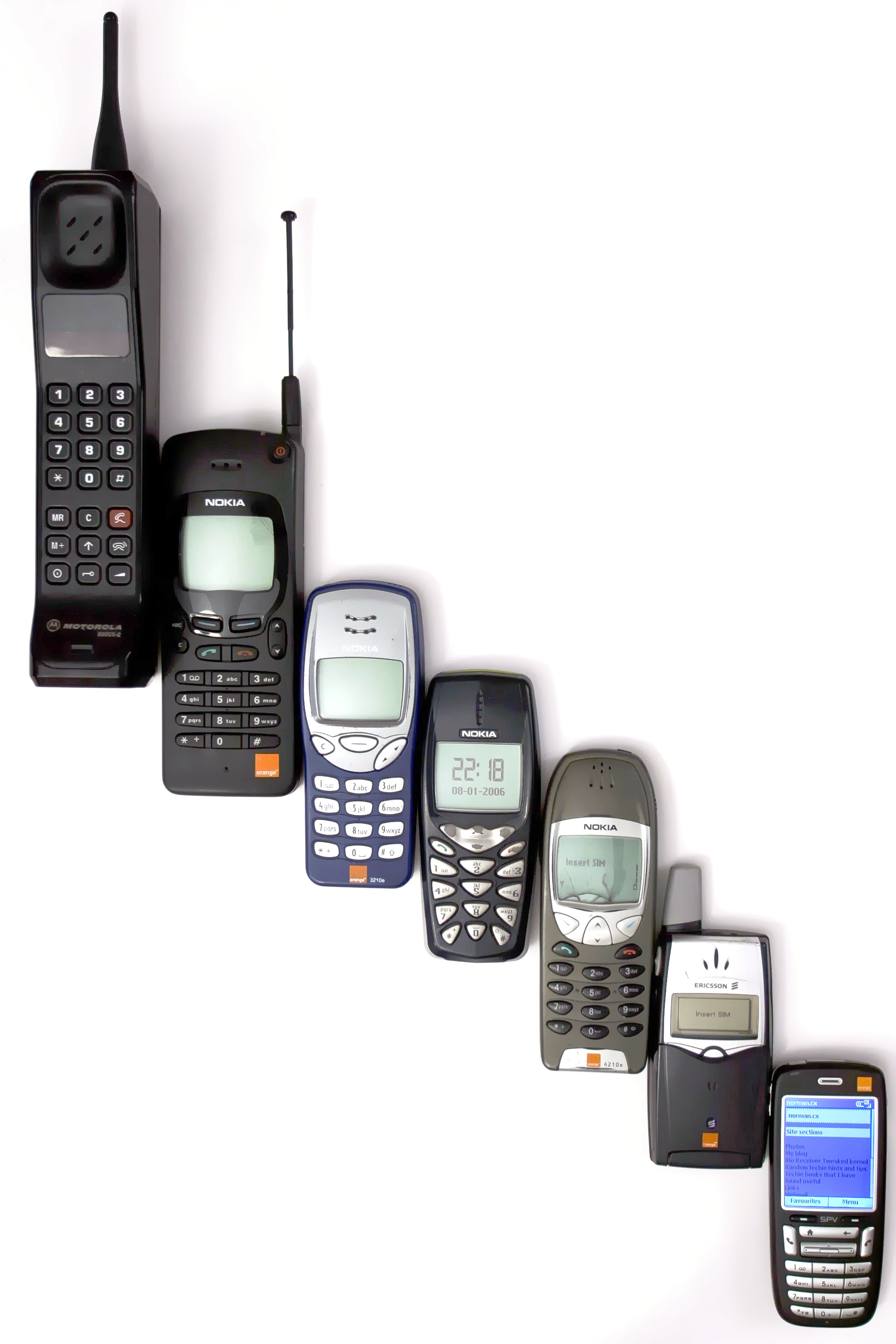
We live in an era of smart stuff.  Our televisions remember our favorite shows, our automobiles remember and adjust the seat to fit us, and our microwave ovens pop every kernel of popcorn to perfection. And then there is the smart phone. I remember those heavy black rotary dial telephones. They didn't have many automated features and they didn't have the time.  You actually had to call a certain number and a nice female voice would tell you how nice it was to shop at some local business before announcing the time.  She always  gave the time in the briefest manner. Never "20 minutes before eight"or "20 'til eight" but seven-forty. And never "quarter after six" or "quarter past six" but six fifteen. She had a very nice voice. and sometimes I would call just hear her voice. But I was young then and had a fixation on Annette Funicello. Now I can see Annette in full color on my Samsung Galaxy SIII but somehow she looks different. I think I'll check out Carly Foulkes.


Do you remember the old portable phones? Boy, were they cheesy! We saw a lot of them in old TV shows.  I had a boss once that had a phone in his car that had dial-up.  Then we had those huge hand held things that very few people could afford.  Of course now folks on Medicaid can get a cellphone. 

I was somewhat reluctant to purchase a cellphone.  There are times when I don't want to be disturbed. With some cellphones you can lose all anonymity   There are times when I don't  want to be known. However, with some encouragement of my spouse, I became a part of the cellphone owning hordes. She convinced me I need one by using the old "What if I need you and you're not around" argument.  Now I carry a smartphone, and it's always within reach. Now it's as much of my everyday life as the belt which holds up my trousers. 


By definition a smartphone is a portable phone that is built on an operating system with advanced computing and connectivity.  In other words, these phones are not just for talking. To truly utilize the power of the smartphone you must use certain applications or "aps".  This is cell phone jargon for programs.  The aps have made me a true fan of smartphones. Here are a few of the ways I use my phone, and this is by no means stretching the capabilities of it. 

Evolution of the cellphone
While visiting a son in Phoenix he requested his Mom make him a banana pudding. We knew not where to find bananas in Phoenix, but by speaking the word "bananas" into the phone a kind voice directed us to the nearest Safeway store.  While in northern California we used the GPS (Global Positioning Satellite) feature to determine our location and dictate a route.  While on vacation in Turkey we used our smartphones to update our Facebook pages with photos and comments. At one attraction photographs were not allowed, but I was able to make sketches on the screen of my smartphone and used the drawings as illustrations on my blog. We frequently check our email as well as airline flight schedules. Photos and video shot with our phones are often used in my YouTube videos, on Picasa or Flickr, and/or in our Blurb or Shutterfly books.  At the gym I plug the earbuds into my phone and listen to my favorite music on Pandora or tunes downloaded from the internet. This list of uses is by no means complete, just some of my favorites. Literally thousands of applications are available. 

The technology of a smartphone is awe inspiring. The same technology in a smartphone is used for automatic pilot in airplanes, controlling military drones, anti-theft devices for our automobiles, and a host of other applications. 

 Am I smarter than my phone? Probably, but sometimes I'm not sure how!

Dec 28, 2012

Planes Over the Islands


Mitsubishi A6M2 Model 21 Type 0
On the 441 acre island in Hawaii's Pearl Harbor is the Pacific Aviation Museum.  This museum on Ford Island is a monument to aviation in the Pacific housed in old aircraft hangers from another era.  Don't expect to see and big collection of aircraft here.  Do expect to see a superb collection of aircraft depicting the attack on Pearl Harbor on December 7, 1941. Hangar 37 has over 41,000 square feet of exhibition space including theater and gift shop.  My favorite part of this museum is what it does best. And that is it explains all aspects of the attack in graphic detail. When entering the first thing that catches your eye is the Zero.  Mitsubishi's superb fighter plane of the Japanese air force. It was faster and more maneuverable than American planes. Also seen is an American Curtis P-40 as flown by the Army Air Force from nearby Wheeler field. You may have seen Ben Afleck flying one in the movie Pearl Harbor. Seemingly out of place is a small red plane hanging from the ceiling which was flown by a  civilian on the day of the attack who saw the everything from the air. There is also a rather pristine B-25 Mitchell bomber on display depicting the aircraft used in Doolittle's famous Tokyo raid. Near the bomber is a kiosk with a computer screen, webcam and keyboard. You can use this to take your photograph in front of the B-25 and post it directly to your facebook page.  On the walls are graphics explaining the flight paths of the various attacking aircraft. A SBD "Dauntless" dive bomber sits close by showing the rigors of battle. No longer pristine, the paint is worn by salt spray and dents are on the fuselage.  We notice aircraft wreckage in one display and discover a very interesting story.  The Japanese Zero crash landed on the island and the pilot was rescued by a local Japanese resident. At this time there was a large Japanese population in Hawaii who had come to the islands as sugarcane and pineapple farm workers. Some were sympathetic to the enemy. This pilot, Airman 1st Class Shigenori Nishikaichi, was sheltered by a local resident. However, less sympathetic other local residents took the pilot from his protector and killed him.  The Japanese sympathizer later committed suicide.  There are two more planes in this exhibit hanger. A F4F "Wildcat" depicting the "Cactus Air Force" in a great display and the Boeing Stearman biplane trainer in which the former president Geo. H. W. Bush soloed.
(clockwise) Zero wreckage, Dauntless, Wildcat, Aeronca

You exit this building  near the tarmac with the tower close by and walk toward Hanger 79. along the way pass the F-86 Sabre, F-4 Phantom II, SH-3 Sea King and others.  As you enter the hanger notice the bullet holes in the glass panels on the right.  Those holes were made by the invading Japanese planes on December 7th.  To the left is a guide with information about the contents of the hanger. Hanging overhead is the F-86 and MiG-15 from the Korean Conflict posed in attack mode.  Underneath are two jet engines representing the axial-flow and centrifugal types. Our guide was very helpful explaining the operation of each. Elsewhere in the hanger are newer aircraft such as the F-14 and F-15. And a number of helicopters. In the corner is a Curtiss P-40 Warhawk in the shark's mouth design of Chenault's Flying Tigers.  There's an F-15 cockpit for training purposes and a B-52 nose section.  One of the most interesting aircraft is the Soviet MiG-21 with U.S. insignia. The Fishbed was used as an aggressor in dogfight exercises.
Mig-15, F-86, MiG-21

The Pacific Aviation Museum is a great treat for the history or aviation buff. But it is only accessible from the Pearl Harbor Visitors Center via shuttle bus.

                   Museum Aircraft

    • Grumman F-14D Tomcat
    • McDonnell   Douglas    F-15C Eagle
    • Bell AH-1 Cobra
    • Bell UH-1 Iroquois
    • Sikorsky SH-3 Sea King
    • Convair F102A Delta Dagger
    • McDonnell Douglas F-4C Phantom II
    • North American Aviation F-86 Sabre
    • Mikoyan-Gurevich MiG-15
    • Curtis P-40E Warhawk
    • Sikorsky SH-60B Seahawk
    • Lockheed T-33 (T-Bird) Shooting Star
    • North American T-6 Texan
    • Grumman F4F-3 Wildcat
    • Douglas SBD Dauntless
    • Mitsubishi A6M2 Model 21 Type 0
    • Aeronca Model 65TC
    • Mikoyan-Gurevich MiG-21


                                                           Click here for Pacific Aviation Museum website
                                                                            Pearl Harbor Naval Base
                                                                            U.S.S. Arizona Memorial